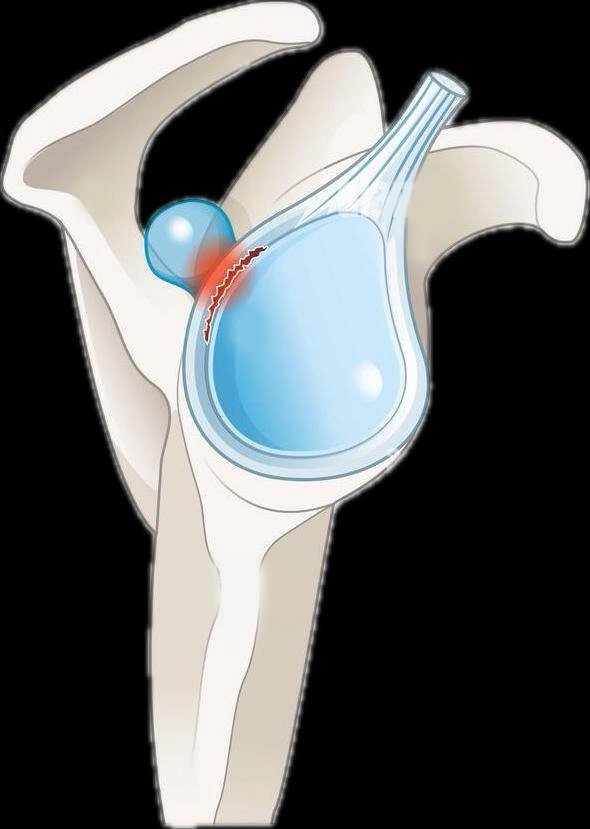
Atypical Cyst Decompression
Atypical cysts in the shoulder region—such as spinoglenoid and humeral head cysts—are uncommon but clinically significant causes of shoulder pain, weakness, and dysfunction. These cysts are often associated with labral tears or degenerative changes and may compress surrounding neurovascular structures. Advanced imaging like MRI is essential for diagnosis. Management typically involves arthroscopic decompression and addressing any underlying pathology (e.g., labral repair). Early treatment can prevent long-term deficits, particularly nerve-related weakness.
Spinoglenoid Cyst Decompression
Spinoglenoid cysts form due to labral pathology, particularly posterosuperior labral tears, and can compress the suprascapular nerve at the spinoglenoid notch. Patients often present with deep, dull posterior shoulder pain and weakness in external rotation due to infraspinatus involvement. MRI reveals a well-defined fluid-filled lesion, and EMG may show nerve involvement. Treatment includes arthroscopic labral repair and cyst decompression, either directly or indirectly by sealing the labral defect. In chronic cases with severe atrophy, full recovery may be limited. Early decompression prevents permanent nerve damage and restores external rotation strength.